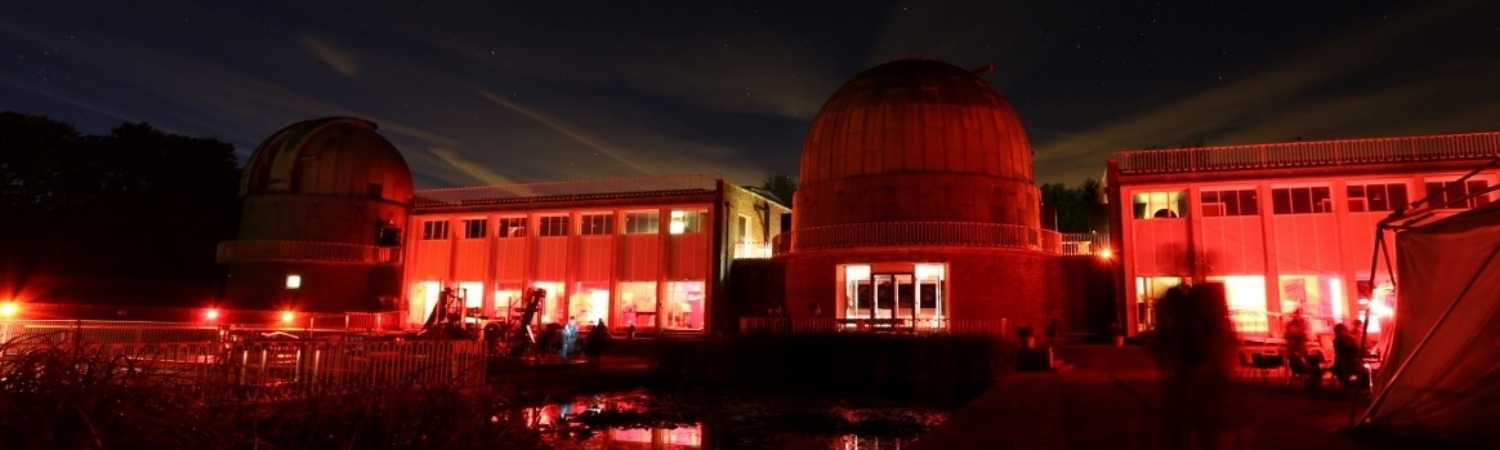
The BBC Sky at Night team have filmed the whole of the next episode here at The Observatory Science ...
read more »
14th May 2013 11:40
We have the following seasonal, part time vacancies:
Weekend assistant
Weekday assistant
Job de...
read more »
29th Apr 2013 18:17
On Friday 12th April The Centre will be the venue for an astronomy themed Teacher Training Workshop ...
read more »
4th Apr 2013 13:46


The Observatory Science Centre
Herstmonceux
Hailsham
East Sussex
BN27 1RN
Herstmonceux
Hailsham
East Sussex
BN27 1RN
Tel: 01323 832731
Fax: 01323 832741
Fax: 01323 832741
What to see on Open Evenings
What to see on Friday 11th and Saturday 12th January 2013 - BBC STARGAZING LIVE EVENT
The sun will have set at about 4.15pm on both days so it will be dark when The Centre opens at 6.30pm. The phase of the Moon is 1 day before and actual NEW MOON respectively so it will not be visible all evening. This will make it nice and dark to view deeper sky objects more clearly.
To see the sky charts for the 11th & 12th January visit Heavens Above. You will need to alter the times and dates in the boxes below the current chart to find out what is in the night sky on the dates of the open evenings.
Jupiter will already have risen and will be visible all evening. It is in the constellation of Taurus between the Hyades and Pleiades clusters (see sky chart above). It will be at MAGNITUDE of -2.7 which is very bright. Jupiter reached OPPOSITION on the 3rd December 2012 so on the 11/12 January 2013 it will be getting further from Earth. The Gallilean Moons will all be visible at some time during the evenings. On the 11th Io and Callisto will be on the eastern side and Europa and Ganymede on the western side. On the 12th Callisto will be on its own on the eastern side with Io, Europa and Ganymede on the western side.
Although the main feature of the evening will be Jupiter the telescopes will also be trained on other interesting celestial objects such as the ORION NEBULA.
The smaller telescopes of Wealden Astronomical Society will also be available for you to look through as will the centre's own Meade 8-inch LX90 (hopefully) which was kindly donated to The Centre by Meade
Jupiter will already have risen and will be visible all evening. It is in the constellation of Taurus between the Hyades and Pleiades clusters (see sky chart above). It will be at MAGNITUDE of -2.7 which is very bright. Jupiter reached OPPOSITION on the 3rd December 2012 so on the 11/12 January 2013 it will be getting further from Earth. The Gallilean Moons will all be visible at some time during the evenings. On the 11th Io and Callisto will be on the eastern side and Europa and Ganymede on the western side. On the 12th Callisto will be on its own on the eastern side with Io, Europa and Ganymede on the western side.
Although the main feature of the evening will be Jupiter the telescopes will also be trained on other interesting celestial objects such as the ORION NEBULA.
The smaller telescopes of Wealden Astronomical Society will also be available for you to look through as will the centre's own Meade 8-inch LX90 (hopefully) which was kindly donated to The Centre by Meade
What to see on Friday 15th February 2013
The sun will have set at about 5.14pm so it will be dark when The Centre opens at 6.30pm. The phase of the Moon is 5 days after NEW MOON and sets at 11.52pm so it will be visible for most of the night.
To see the sky charts for the 15th February visit Heavens Above. You will need to alter the times and dates in the boxes below the current chart to find out what is in the night sky on the dates of the open evenings.
Jupiter will already have risen and will be visible all evening. It is in the constellation of Taurus between the Hyades and Pleiades clusters (see sky chart from Heavens Above). It will be at MAGNITUDE -2.4 which is still very bright. Jupiter reached OPPOSITION on the 3rd December 2012 so on the 15th February 2013 it will be getting further from Earth. The Gallilean Moons will all be visible at some time during the evening with Io and Ganymede on the western side and Europa and Callisto on the eastern side. Europa will begin to cross the face of Jupiter at 9.54pm. The centre of Jupiter's GREAT RED SPOT will cross the central meridian (the imaginary line running from north to south) of the planet at 10.34pm and will be well placed for viewing for at least an hour before and after this time.
Jupiter will of course be one of the main features of the evening but there is of course ASTEROID 2012 DA14! This 44 m diameter asteroid is expected to approach closer to Earth than geosynchronous satellites. An amateur team discovered this asteroid, 2012 DA14, on 23 February. Its small size and orbit meant it was found only after it had passed the Earth at about seven times the distance of the Moon. Current predictions indicate that on its next flyby, due on 15 February 2013, it will pass Earth at just 24,000 km. It has an estimated mass of 120,000 tonnes. If it did impact the Earth the explosion would be equivalent to 2.3 megatons of TNT. 2012 DA14 will approach the Earth again sometime in 2020. You will not be able to see this with your naked eye and you will really need to know where to look. It is travelling pretty fast and covers the equivalent of a full moon's width in just 45seconds! To find out where to look follow this link:
http://www.heavens-above.com/2012da14.aspx?lat=51.17934&lng=-1.05469&loc=Herstmonceux&alt=0&tz=GMT
Other interesting celestial objects visible on the 15th February include the ORION NEBULA.
The smaller telescopes of Wealden Astronomical Society will also be available for you to look through as will the centre's own Meade 8-inch LX90 (hopefully) which was kindly donated to The Centre by Meade
Jupiter will already have risen and will be visible all evening. It is in the constellation of Taurus between the Hyades and Pleiades clusters (see sky chart from Heavens Above). It will be at MAGNITUDE -2.4 which is still very bright. Jupiter reached OPPOSITION on the 3rd December 2012 so on the 15th February 2013 it will be getting further from Earth. The Gallilean Moons will all be visible at some time during the evening with Io and Ganymede on the western side and Europa and Callisto on the eastern side. Europa will begin to cross the face of Jupiter at 9.54pm. The centre of Jupiter's GREAT RED SPOT will cross the central meridian (the imaginary line running from north to south) of the planet at 10.34pm and will be well placed for viewing for at least an hour before and after this time.
Jupiter will of course be one of the main features of the evening but there is of course ASTEROID 2012 DA14! This 44 m diameter asteroid is expected to approach closer to Earth than geosynchronous satellites. An amateur team discovered this asteroid, 2012 DA14, on 23 February. Its small size and orbit meant it was found only after it had passed the Earth at about seven times the distance of the Moon. Current predictions indicate that on its next flyby, due on 15 February 2013, it will pass Earth at just 24,000 km. It has an estimated mass of 120,000 tonnes. If it did impact the Earth the explosion would be equivalent to 2.3 megatons of TNT. 2012 DA14 will approach the Earth again sometime in 2020. You will not be able to see this with your naked eye and you will really need to know where to look. It is travelling pretty fast and covers the equivalent of a full moon's width in just 45seconds! To find out where to look follow this link:
http://www.heavens-above.com/2012da14.aspx?lat=51.17934&lng=-1.05469&loc=Herstmonceux&alt=0&tz=GMT
Other interesting celestial objects visible on the 15th February include the ORION NEBULA.
The smaller telescopes of Wealden Astronomical Society will also be available for you to look through as will the centre's own Meade 8-inch LX90 (hopefully) which was kindly donated to The Centre by Meade
What to see on Friday 16th February 2013
The sun will have set at about 5.16pm so it will be dark when The Centre opens at 6.30pm. The phase of the Moon is 1 day before FIRST QUARTER and will be visible all night, not setting until after midnight.
To see the sky charts for the 16th February visit Heavens Above. You will need to alter the times and dates in the boxes below the current chart to find out what is in the night sky on the dates of the open evenings.
Jupiter will already be high in the sky and will be visible all evening. It is in the constellation of Taurus between the Hyades and Pleiades clusters (see sky chart from Heavens Above). It will be at MAGNITUDE -2.4 which is still very bright. Jupiter reached OPPOSITION on the 3rd December 2012 so on the 16th February 2013 it will be getting further from Earth. The Gallilean Moons will all be visible during the evening with Ganymede and Europa on the western side and Io and Callisto on the eastern side. The centre of Jupiter's GREAT RED SPOT will cross the central meridian (the imaginary line running from north to south) of the planet at 6.26pm and will be well placed for viewing for at least an hour after this time so hopefully you will see it before it disappears.
Jupiter will be one of the main features of the evening but the Moon is also very beautiful through the telescopes and you will be able to see many features such as craters and the mare (seas). Other interesting celestial objects visible on the 16th February include the ORION NEBULA.
The smaller telescopes of Wealden Astronomical Society will also be available for you to look through as will the centre's own Meade 8-inch LX90 (hopefully) which was kindly donated to The Centre by Meade
The sun will have set at about 5.16pm so it will be dark when The Centre opens at 6.30pm. The phase of the Moon is 1 day before FIRST QUARTER and will be visible all night, not setting until after midnight.
To see the sky charts for the 16th February visit Heavens Above. You will need to alter the times and dates in the boxes below the current chart to find out what is in the night sky on the dates of the open evenings.
Jupiter will already be high in the sky and will be visible all evening. It is in the constellation of Taurus between the Hyades and Pleiades clusters (see sky chart from Heavens Above). It will be at MAGNITUDE -2.4 which is still very bright. Jupiter reached OPPOSITION on the 3rd December 2012 so on the 16th February 2013 it will be getting further from Earth. The Gallilean Moons will all be visible during the evening with Ganymede and Europa on the western side and Io and Callisto on the eastern side. The centre of Jupiter's GREAT RED SPOT will cross the central meridian (the imaginary line running from north to south) of the planet at 6.26pm and will be well placed for viewing for at least an hour after this time so hopefully you will see it before it disappears.
Jupiter will be one of the main features of the evening but the Moon is also very beautiful through the telescopes and you will be able to see many features such as craters and the mare (seas). Other interesting celestial objects visible on the 16th February include the ORION NEBULA.
The smaller telescopes of Wealden Astronomical Society will also be available for you to look through as will the centre's own Meade 8-inch LX90 (hopefully) which was kindly donated to The Centre by Meade
What to see on Friday 23rd February 2013
The sun will have set at about 5.30pm so it will be dark when The Centre opens at 6.30pm. The phase of the Moon is 2 days before FULL MOON and will be visible all night, rising at 3.16pm and not setting until 5.50am the following morning.
To see the sky charts for the 23rd February visit Heavens Above. You will need to alter the times and dates in the boxes below the current chart to find out what is in the night sky on the dates of the open evenings.
Jupiter will already be high in the sky and will be visible all evening. It is in the constellation of Taurus between the Hyades and Pleiades clusters (see sky chart from Heavens Above). It will be at MAGNITUDE -2.3 which is still very bright. Jupiter reached OPPOSITION on the 3rd December 2012 so on the 23rd February 2013 it will be getting further from Earth. The Gallilean Moons will all be visible during the evening with Callisto, Ganymede and Europa on the western side and Io on the eastern side (in that order from west to east). The centre of Jupiter's GREAT RED SPOT will cross the central meridian (the imaginary line running from north to south) of the planet at 7.14pm and will be well placed for viewing for at least an hour before and after this time.
Jupiter will be a main feature of the evening but the Moon is also very beautiful through the telescopes and you will be able to see many features even though it is extremely bright. A Moon filter will be used to help cut down the glare. Other interesting celestial objects visible on the 16th February include the ORION NEBULA.
The smaller telescopes of Wealden Astronomical Society will also be available for you to look through as will the centre's own Meade 8-inch LX90 (hopefully) which was kindly donated to The Centre by Meade
The sun will have set at about 5.30pm so it will be dark when The Centre opens at 6.30pm. The phase of the Moon is 2 days before FULL MOON and will be visible all night, rising at 3.16pm and not setting until 5.50am the following morning.
To see the sky charts for the 23rd February visit Heavens Above. You will need to alter the times and dates in the boxes below the current chart to find out what is in the night sky on the dates of the open evenings.
Jupiter will already be high in the sky and will be visible all evening. It is in the constellation of Taurus between the Hyades and Pleiades clusters (see sky chart from Heavens Above). It will be at MAGNITUDE -2.3 which is still very bright. Jupiter reached OPPOSITION on the 3rd December 2012 so on the 23rd February 2013 it will be getting further from Earth. The Gallilean Moons will all be visible during the evening with Callisto, Ganymede and Europa on the western side and Io on the eastern side (in that order from west to east). The centre of Jupiter's GREAT RED SPOT will cross the central meridian (the imaginary line running from north to south) of the planet at 7.14pm and will be well placed for viewing for at least an hour before and after this time.
Jupiter will be a main feature of the evening but the Moon is also very beautiful through the telescopes and you will be able to see many features even though it is extremely bright. A Moon filter will be used to help cut down the glare. Other interesting celestial objects visible on the 16th February include the ORION NEBULA.
The smaller telescopes of Wealden Astronomical Society will also be available for you to look through as will the centre's own Meade 8-inch LX90 (hopefully) which was kindly donated to The Centre by Meade
What to see on Saturday 9th March 2013
The sun will have set at about 5.55pm so it will still be twilight when The Centre opens at 6.30pm. The phase of the Moon is 2 days before NEW MOON and will not be visible at all during the evening.
To see the sky charts for the 9th March visit Heavens Above. You will need to alter the times and dates in the boxes below the current chart to find out what is in the night sky on the dates of the open evenings.
Jupiter will already be high in the sky and will be visible all evening. It is in the constellation of Taurus between the Hyades and Pleiades clusters (see sky chart from Heavens Above). It will be at MAGNITUDE -2.3 which is still very bright. Jupiter reached OPPOSITION on the 3rd December 2012 so on the 9th March 2013 it will be getting further from Earth. The Gallilean Moons will be visible during the evening with with Callisto, Ganymede and Europa on the western side and Io on the eastern side (in that order from west to east). Ganymede and Europa will appear very close together. The centre of Jupiter's GREAT RED SPOT will cross the central meridian (the imaginary line running from north to south) of the planet at 8.53pm and will be well placed for viewing for at least an hour before and after this time.
On the 10th March the comet PANSTARRS is also making its closest appraoach to the Sun at 45 million km (28 million miles). At this distance from the Sun cometary ice will vaporise and form a bright coma and tail. On the 9th it will be too close to the Sun to be visible but see the information below for the 16th March when you may just spot it shortly after sunset.
Other interesting celestial objects visible on the 16th February include the ORION NEBULA.
The smaller telescopes of Wealden Astronomical Society will also be available for you to look through as will the centre's own Meade 8-inch LX90 (hopefully) which was kindly donated to The Centre by Meade
The sun will have set at about 5.55pm so it will still be twilight when The Centre opens at 6.30pm. The phase of the Moon is 2 days before NEW MOON and will not be visible at all during the evening.
To see the sky charts for the 9th March visit Heavens Above. You will need to alter the times and dates in the boxes below the current chart to find out what is in the night sky on the dates of the open evenings.
Jupiter will already be high in the sky and will be visible all evening. It is in the constellation of Taurus between the Hyades and Pleiades clusters (see sky chart from Heavens Above). It will be at MAGNITUDE -2.3 which is still very bright. Jupiter reached OPPOSITION on the 3rd December 2012 so on the 9th March 2013 it will be getting further from Earth. The Gallilean Moons will be visible during the evening with with Callisto, Ganymede and Europa on the western side and Io on the eastern side (in that order from west to east). Ganymede and Europa will appear very close together. The centre of Jupiter's GREAT RED SPOT will cross the central meridian (the imaginary line running from north to south) of the planet at 8.53pm and will be well placed for viewing for at least an hour before and after this time.
On the 10th March the comet PANSTARRS is also making its closest appraoach to the Sun at 45 million km (28 million miles). At this distance from the Sun cometary ice will vaporise and form a bright coma and tail. On the 9th it will be too close to the Sun to be visible but see the information below for the 16th March when you may just spot it shortly after sunset.
Other interesting celestial objects visible on the 16th February include the ORION NEBULA.
The smaller telescopes of Wealden Astronomical Society will also be available for you to look through as will the centre's own Meade 8-inch LX90 (hopefully) which was kindly donated to The Centre by Meade
What to see on Saturday 16th March 2013
The sun will have set at about 6.12pm so it will be twilight when The Centre opens at 6.30pm. The phase of the Moon is 3 days before FIRST QUARTER and will be visible for most of the night, setting at 11.42pm.
To see the sky charts for the 16th March visit Heavens Above. You will need to alter the times and dates in the boxes below the current chart to find out what is in the night sky on the dates of the open evenings.
Jupiter will already be high in the sky and will be visible all evening. It is in the constellation of Taurus between the Hyades and Pleiades clusters (see sky chart from Heavens Above). It will be at MAGNITUDE -2.2 which is still very bright. Jupiter reached OPPOSITION on the 3rd December 2012 so on the 16th March 2013 it will be getting further from Earth. The Gallilean Moons will be visible during the evening with Ganymede and Europa on the western side extremely close together one may be eclipsing the other. Io and Callisto will be on the eastern side also close together. The centre of Jupiter's GREAT RED SPOT will cross the central meridian (the imaginary line running from north to south) of the planet at 9.42pm and will be well placed for viewing for at least an hour before and after this time.
While Jupiter will be one of the main features of the evening there is also the possibility of seeing the comet PANSTARRS which may become visible to the eye alone or through binoculars around the time it is closest to the sun in March. The Pan-STARRS telescope in Hawaii discovered this comet in June 2011. Since comets carry the names of their discoverers, it has been designated C/2011 L4 (PANSTARRS). Only the largest telescopes on Earth could glimpse Comet PANSTARRS when it was first discovered, but amateurs telescopes began to pick it up by May 2012. By October 2012, its surrounding coma was seen to be large and fine at an estimated 75,000 miles (120,000 kilometers) wide. In March 2013, by some estimates, this comet should get as bright as Venus, but do remember that comets are notoriously difficult to predict. As comet-hunter David Levy once famously said: "Comets are like cats; they have tails, and they do precisely what they want."
The sun will have set at about 6.12pm so it will be twilight when The Centre opens at 6.30pm. The phase of the Moon is 3 days before FIRST QUARTER and will be visible for most of the night, setting at 11.42pm.
To see the sky charts for the 16th March visit Heavens Above. You will need to alter the times and dates in the boxes below the current chart to find out what is in the night sky on the dates of the open evenings.
Jupiter will already be high in the sky and will be visible all evening. It is in the constellation of Taurus between the Hyades and Pleiades clusters (see sky chart from Heavens Above). It will be at MAGNITUDE -2.2 which is still very bright. Jupiter reached OPPOSITION on the 3rd December 2012 so on the 16th March 2013 it will be getting further from Earth. The Gallilean Moons will be visible during the evening with Ganymede and Europa on the western side extremely close together one may be eclipsing the other. Io and Callisto will be on the eastern side also close together. The centre of Jupiter's GREAT RED SPOT will cross the central meridian (the imaginary line running from north to south) of the planet at 9.42pm and will be well placed for viewing for at least an hour before and after this time.
While Jupiter will be one of the main features of the evening there is also the possibility of seeing the comet PANSTARRS which may become visible to the eye alone or through binoculars around the time it is closest to the sun in March. The Pan-STARRS telescope in Hawaii discovered this comet in June 2011. Since comets carry the names of their discoverers, it has been designated C/2011 L4 (PANSTARRS). Only the largest telescopes on Earth could glimpse Comet PANSTARRS when it was first discovered, but amateurs telescopes began to pick it up by May 2012. By October 2012, its surrounding coma was seen to be large and fine at an estimated 75,000 miles (120,000 kilometers) wide. In March 2013, by some estimates, this comet should get as bright as Venus, but do remember that comets are notoriously difficult to predict. As comet-hunter David Levy once famously said: "Comets are like cats; they have tails, and they do precisely what they want."
Comet Panstarrs appears briefly in the west after sunset in March 2013. This comet is found in the vicinity of the waxing crescent moon on March 12, 13 and 14. The comet swings above the star Algenib on March 17/18, and above the star Alpheratz on March 25/26. It finally meets up with the Andromeda galaxy in early April.
Throughout March 2013 the comet could be visible in the Northern Hemisphere evening sky low in the west after sunset. It will move northward each evening during March 2013 as it moves from being in front of the constellation Pisces to being in front of the constellations Pegasus and Andromeda. At this time, the comet might have a bright dust tail, and perhaps visible to the unaided eye or binoculars if it lives up to expectations (http://earthsky.org/space/comet-panstarrs-possibly-visible-to-eye-in-march-2013).
The Moon is also very beautiful through the telescopes and you will be able to see many features such as craters and the mare (seas). Other interesting celestial objects visible on the 16th March include the ORION NEBULA.
The smaller telescopes of Wealden Astronomical Society will also be available for you to look through as will the centre's own Meade 8-inch LX90 (hopefully) which was kindly donated to The Centre by Meade
Throughout March 2013 the comet could be visible in the Northern Hemisphere evening sky low in the west after sunset. It will move northward each evening during March 2013 as it moves from being in front of the constellation Pisces to being in front of the constellations Pegasus and Andromeda. At this time, the comet might have a bright dust tail, and perhaps visible to the unaided eye or binoculars if it lives up to expectations (http://earthsky.org/space/comet-panstarrs-possibly-visible-to-eye-in-march-2013).
The Moon is also very beautiful through the telescopes and you will be able to see many features such as craters and the mare (seas). Other interesting celestial objects visible on the 16th March include the ORION NEBULA.
The smaller telescopes of Wealden Astronomical Society will also be available for you to look through as will the centre's own Meade 8-inch LX90 (hopefully) which was kindly donated to The Centre by Meade
What to see on Saturday 6th April 2013
The sun will have set at 7.42pm so it will be twilight when The Centre opens at 8pm. The phase of the Moon is 3 days after LAST QUARTER and will not be visible at all during the evening having set at 3.30pm.
To see the sky charts for the 6th April visit Heavens Above. You will need to alter the times and dates in the boxes below the current chart to find out what is in the night sky on the dates of the open evenings.
Jupiter will already be high in the sky and will be visible all evening although it will have descended towards the western horizon as the evening progresses making it difficult to see through the historic telescopes. It is in the constellation of Taurus between the Hyades and Pleiades clusters (see sky chart from Heavens Above). It will be at MAGNITUDE -2.1 which is still very bright. Jupiter reached OPPOSITION on the 3rd December 2012 so on the 6th April 2013 it will be getting further from Earth. The Gallilean Moons will be visible during the evening with Callisto almost appearing by itself on the Eastern side and Io crossing behind Jupiter to appear on the Eastern side at about 8pm. Europa will have appeared on the western side with Ganymede crossing the face of Jupiter appearing very close to Europa on the western side at about 8.30pm. The GREAT RED SPOT will not be visible throughout the evening.
The sun will have set at 7.42pm so it will be twilight when The Centre opens at 8pm. The phase of the Moon is 3 days after LAST QUARTER and will not be visible at all during the evening having set at 3.30pm.
To see the sky charts for the 6th April visit Heavens Above. You will need to alter the times and dates in the boxes below the current chart to find out what is in the night sky on the dates of the open evenings.
Jupiter will already be high in the sky and will be visible all evening although it will have descended towards the western horizon as the evening progresses making it difficult to see through the historic telescopes. It is in the constellation of Taurus between the Hyades and Pleiades clusters (see sky chart from Heavens Above). It will be at MAGNITUDE -2.1 which is still very bright. Jupiter reached OPPOSITION on the 3rd December 2012 so on the 6th April 2013 it will be getting further from Earth. The Gallilean Moons will be visible during the evening with Callisto almost appearing by itself on the Eastern side and Io crossing behind Jupiter to appear on the Eastern side at about 8pm. Europa will have appeared on the western side with Ganymede crossing the face of Jupiter appearing very close to Europa on the western side at about 8.30pm. The GREAT RED SPOT will not be visible throughout the evening.
Comet PANSTARRS on 1st April at 9pm
Comet Panstarrs is still in the evening sky and should be visible with binoculars. The picture above gives you an idea of where to look in relation to the constellation of Andromeda at the beginning of April.
Other interesting celestial objects visible on the 6th April will include the ORION NEBULA although only at the very start of the evening and the beautiful globular cluster M13 in Hercules but only towards the end of the evening as it rises higher and higher in the sky.
The smaller telescopes of Wealden Astronomical Society will also be available for you to look through as will the centre's own Meade 8-inch LX90 (hopefully) which was kindly donated to The Centre by Meade
Other interesting celestial objects visible on the 6th April will include the ORION NEBULA although only at the very start of the evening and the beautiful globular cluster M13 in Hercules but only towards the end of the evening as it rises higher and higher in the sky.
The smaller telescopes of Wealden Astronomical Society will also be available for you to look through as will the centre's own Meade 8-inch LX90 (hopefully) which was kindly donated to The Centre by Meade
What to see on Friday 17th May 2013
The sun will have set at 8.49pm so it will still be light when The Centre opens at 8pm. The phase of the Moon is 1 day before FIRST QUARTER. It will have risen at 11.43am and will not set until 1.41 am the following morning so it will be visible all evening. The Moon is very beautiful to look at through the telescopes
To see the sky charts for the 6th April visit Heavens Above. You will need to alter the times and dates in the boxes below the current chart to find out what is in the night sky on the dates of the open evenings.
Jupiter will already be descending towards the western horizon and will set just before 11pm so will only be visible very early on before it disappears behind the trees. It will be difficult to see through the historic telescopes due to its position. Jupiter is in the constellation of Taurus between the two horns of the bull (see sky chart from Heavens Above). It will be at MAGNITUDE -1.9 which, although not as bright as it has been, is still very bright. Jupiter reached OPPOSITION on the 3rd December 2012 so on the 17th May 2013 it will be moving further from Earth. The Gallilean Moons will be visible with Callisto appearing by itself on the western side Europa, Io and Ganymede appearing on the eastern side in that order from Jupiter.
Saturn will already have risen by 8pm but will still be quite low on the eastern horizon so may not be visible through the historic telescopes initially. It is not as bright as Jupiter at MAGNITUDE +0.2 because it is much further away from Earth. Saturn reached OPPOSITION on the 28th April and is now beginning to move further away from the Earth. Even though the historic telescopes may not be able to view Saturn until a little later in the evening, as it moves higher and higher in the night sky the smaller telescopes should be able to locate it. The beautiful RINGS of SATURN will be visible.
Although the Moon, Jupiter (initially) and Saturn will be the main features of the evening, other interesting celestial objects visible on the 17th May will include the beautiful globular cluster M13 in Hercules when it rises high enough in the sky.
The smaller telescopes of Wealden Astronomical Society will also be available for you to look through as will the centre's own Meade 8-inch LX90 (hopefully) which was kindly donated to The Centre by Meade
The sun will have set at 8.49pm so it will still be light when The Centre opens at 8pm. The phase of the Moon is 1 day before FIRST QUARTER. It will have risen at 11.43am and will not set until 1.41 am the following morning so it will be visible all evening. The Moon is very beautiful to look at through the telescopes
To see the sky charts for the 6th April visit Heavens Above. You will need to alter the times and dates in the boxes below the current chart to find out what is in the night sky on the dates of the open evenings.
Jupiter will already be descending towards the western horizon and will set just before 11pm so will only be visible very early on before it disappears behind the trees. It will be difficult to see through the historic telescopes due to its position. Jupiter is in the constellation of Taurus between the two horns of the bull (see sky chart from Heavens Above). It will be at MAGNITUDE -1.9 which, although not as bright as it has been, is still very bright. Jupiter reached OPPOSITION on the 3rd December 2012 so on the 17th May 2013 it will be moving further from Earth. The Gallilean Moons will be visible with Callisto appearing by itself on the western side Europa, Io and Ganymede appearing on the eastern side in that order from Jupiter.
Saturn will already have risen by 8pm but will still be quite low on the eastern horizon so may not be visible through the historic telescopes initially. It is not as bright as Jupiter at MAGNITUDE +0.2 because it is much further away from Earth. Saturn reached OPPOSITION on the 28th April and is now beginning to move further away from the Earth. Even though the historic telescopes may not be able to view Saturn until a little later in the evening, as it moves higher and higher in the night sky the smaller telescopes should be able to locate it. The beautiful RINGS of SATURN will be visible.
Although the Moon, Jupiter (initially) and Saturn will be the main features of the evening, other interesting celestial objects visible on the 17th May will include the beautiful globular cluster M13 in Hercules when it rises high enough in the sky.
The smaller telescopes of Wealden Astronomical Society will also be available for you to look through as will the centre's own Meade 8-inch LX90 (hopefully) which was kindly donated to The Centre by Meade
BBC Stargazing LIVE